Mein Objekt is the museum app for your institution: a playful visitor guide with curated object dialogues.
Story first instead of information overload, browser-based and frictionless, with the quality control museums need.
"Every object gets a personality, and the institution gets a complete multimedia guide."
Developed together with
In a world full of feeds, clips, and constant input, museums need something else: moments that stay with people. Many museum apps simply extend the wall label instead of creating curiosity.
When people feel overloaded, they disconnect. What remains is not a list of facts, but a memorable moment.
Date, material, provenance: accurate, but cold. Every object carries a point of view, a story, and often some irony. Most of that still goes unheard.
That is what digital museum experiences often feel like today. Storytelling is the oldest engagement tool in the world, and it still works.
Great interpretation has always been a form of storytelling. With Mein Objekt, exhibits and places gain attitude, humor, and a narrative that unfolds in conversation. Visitors enter a Magic Circle with different rules and start asking: what does this object have to say to me?
Every object gets a voice, a stance, and a character that truly fits it.
Every conversation has an arc, a secret, and a moment when something clicks.
Ask, choose, decide where the conversation goes. Passive consumption turns into active discovery.
Objects are not frozen in time. They still have something to say about today, about us, and about what lasts.
"A vase can be ironic. A suit of armor can be afraid. A statue can lie. Visitors know it is a game and still lean in. That is exactly why real curiosity appears."
From major museums to university campuses, these examples show how differently institutions are already using Mein Objekt.
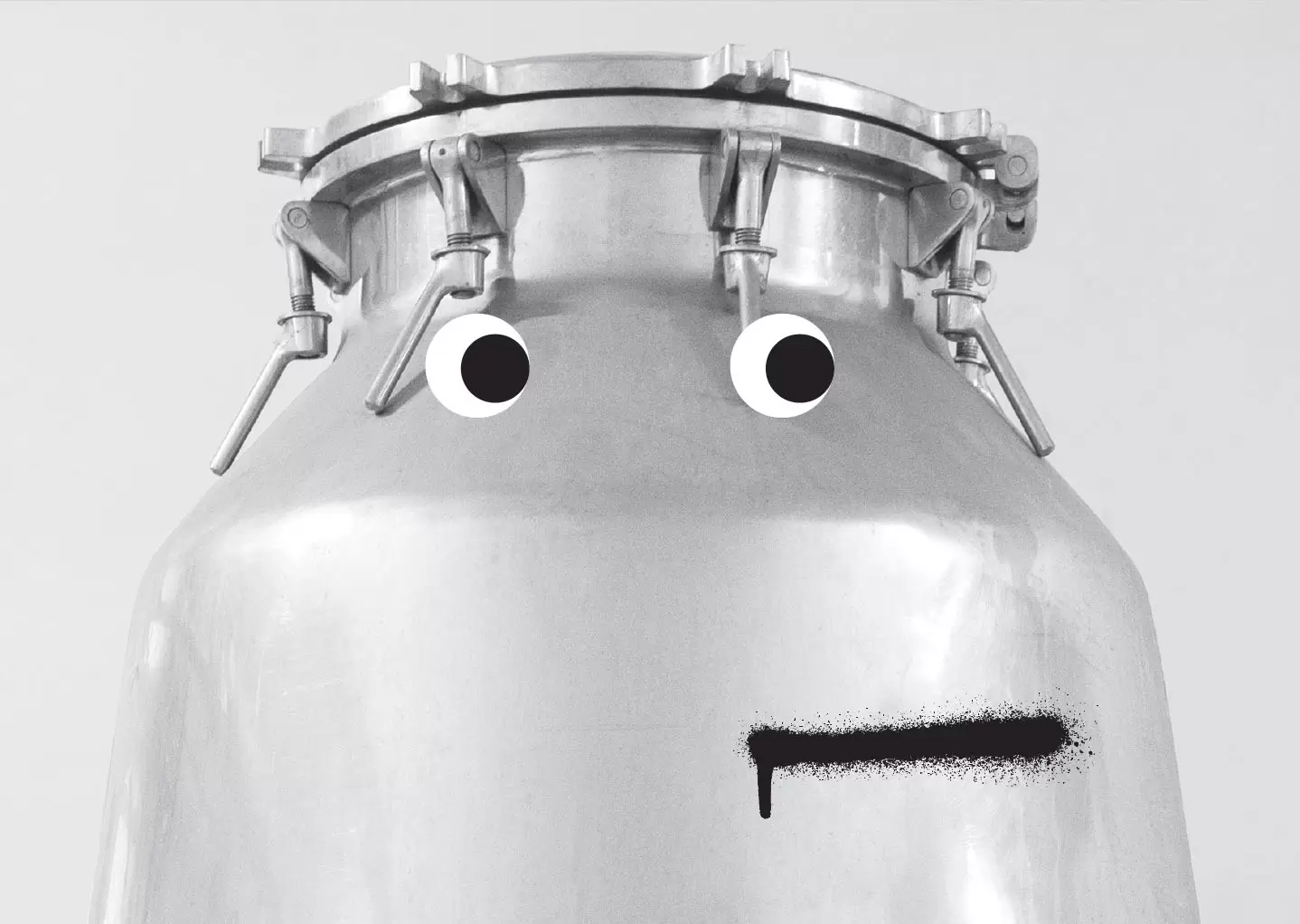
Museum Schaffen Winterthur uses Wintidings to make its exhibits accessible as a free web app, both on site and from home.
Read more →
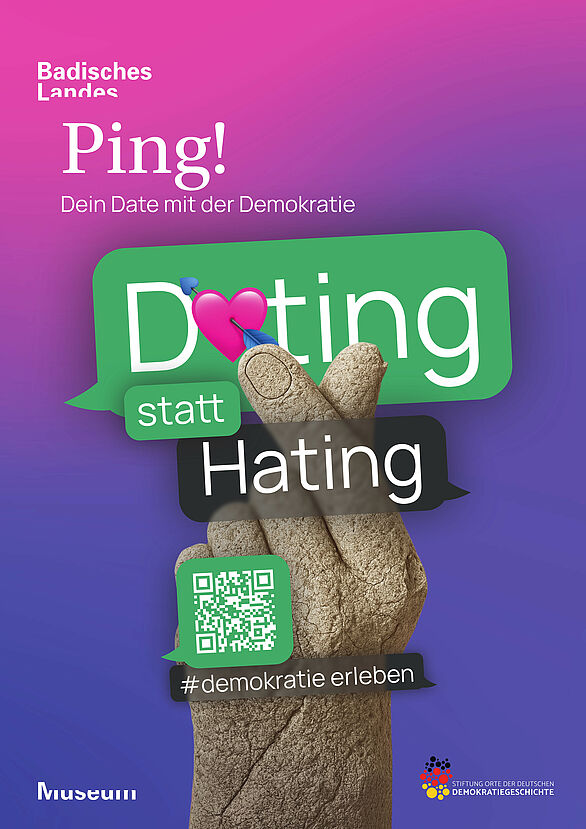
The Badisches Landesmuseum has evolved Mein Objekt from an in-museum object chat into the browser-based city tour Ping!.
Read more →
Humboldt University uses Mein Objekt for playful science communication across the campus, the subway station, and exhibitions.
Read more →
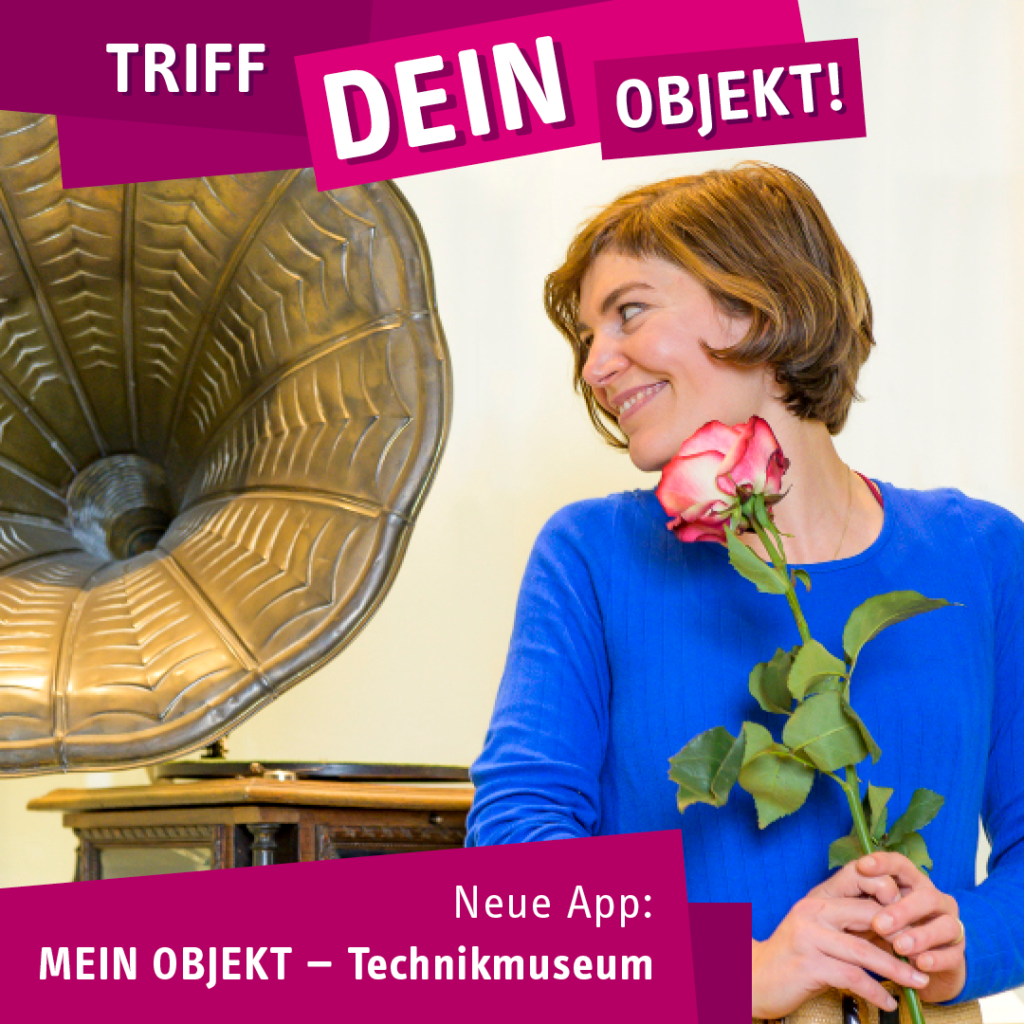
The Deutsches Technikmuseum uses Mein Objekt for personal object conversations before, during, and after the visit.
Read more →The Bode Museum opens up artworks through personal dialogues, research, and rich object stories.
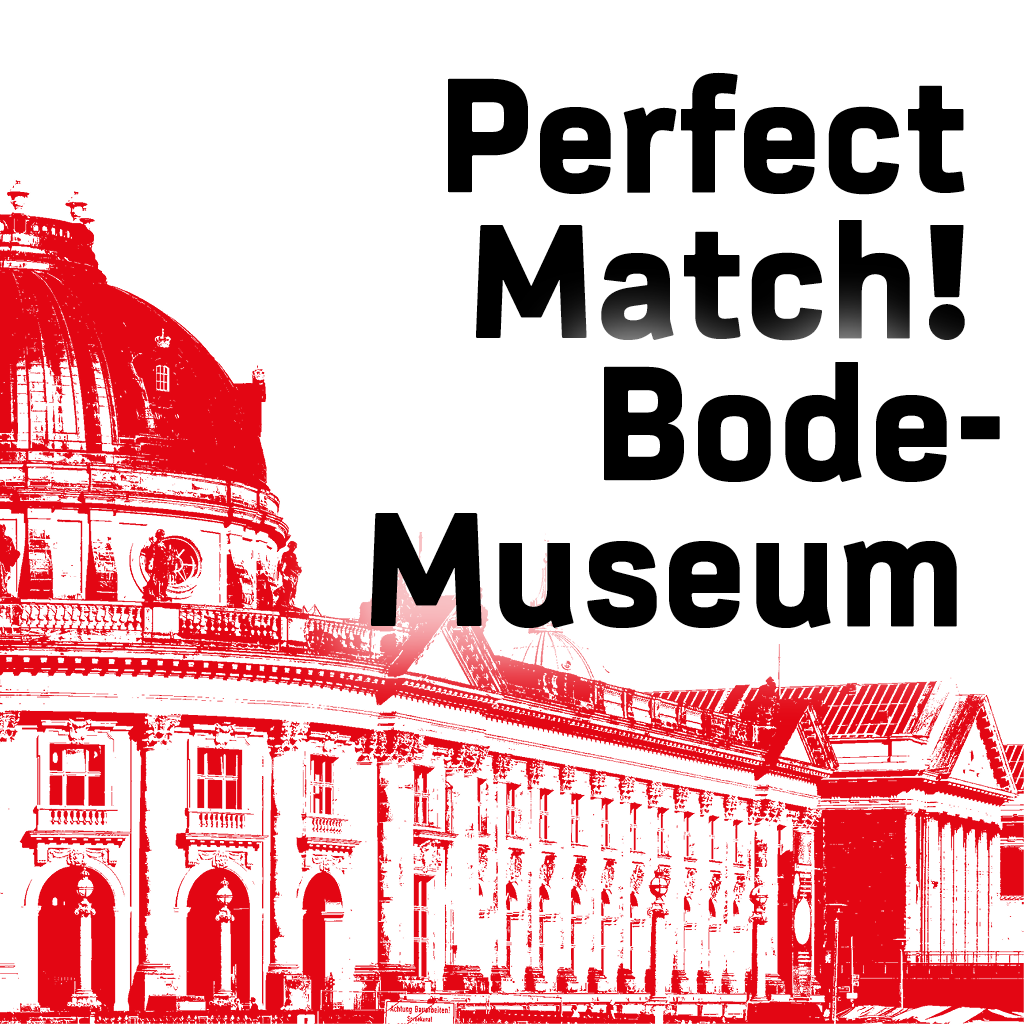
Read more →The Computerspielemuseum combines object chats, branching dialogues, and small games in a playful exhibition format.
Read more →Mein Objekt covers everything institutions expect from a visitor guide while giving visitors the experience they actually deserve.
Scan a QR code and you are in. Mein Objekt runs in the browser, with no installation, no app store, and no friction.
No Wi-Fi in the basement? No problem. Museum content is cached, so the guide keeps running.
Spoken guidance, film clips, and audio layers, embedded wherever media strengthens the experience.
Thematic paths plus indoor and outdoor maps, so storytelling never breaks down at the navigation layer.
Number entry or QR code: visitors can access deeper information, sources, and media directly at each object.
Engagement, dwell time, and visitor research, tracked in a GDPR-compliant way via Matomo, with ROI always in view.
"The dialogues with the exhibits are sometimes very funny, sometimes very moving, but always engaging and compelling."
"Through personal conversations with the exhibits, users discover fascinating details in a playful way. The dialogue can happen before, during, or after the visit."
"Science can be enjoyable too. With sciencely, important questions can be explored in a low-barrier, multidirectional dialogue."
Mein Objekt was developed within museum4punkt0, the German federal funding program for digital transformation in museums.
From object texts to audio, video, and curated dialogues, everything lives in one system. No coding skills required and no agency dependency.
Texts, images, audio, video, tours, and object dialogues, all created, maintained, and published in one place.
The dialogue editor is built for editorial work. Anyone familiar with exhibition text production can use it right away.
New exhibition, new object, new dialogue: your team makes changes on its own. Immediately, without waiting time, and without external costs.
"After a short onboarding phase, the chatbuilder is intuitive to use. No programming knowledge is required, and we created all content ourselves in a comparatively short time."
In 30 minutes we show you what Mein Objekt could look like for your institution.
No obligation. 30 minutes. No hard sales pitch.
Every institution is different. Size, collection, and goals vary widely.
That is why we put together a tailored proposal quickly. We work with small museums and large institutions alike, and we scope Mein Objekt so it fits your framework.
The fastest way to clarify this is in a conversation.
No. Mein Objekt runs directly in the browser, with no app store, no download, and no installation.
Visitors scan a QR code and start immediately.
Fewer than 5% of museum visitors are willing to download an app, according to available studies.
We built Mein Objekt as a progressive web app because the best guide is the one everyone can actually use.
It works for small institutions just as well as for large ones. From 10 objects to hundreds.
Mein Objekt was originally developed for very large institutions, with a swipe module that makes even extensive collections easy to explore. In practice, we support both focused exhibitions with a few objects and complex collections with many layers.
A single app can represent multiple institutions, city partners, or cultural actors together: one city, one collection, one shared experience.
No. The editor is built for editorial work. If your team can write exhibition texts, it can make objects speak.
Your team works fully in the CMS: writing dialogues, embedding media, building tours, and publishing updates live.
No code, no agency. We support your team with onboarding and training from the start, and we stay available for questions.
Neither. The core is curated storytelling.
Your team writes the dialogues, defines the personality of each object, and approves the content.
AI can support the writing process, but dramaturgy, tone, and facts remain under your editorial control.
No hallucinations, no black box - just your institution's own voice.
All dialogues go through the same approval process as exhibition texts.
Voice, facts, and tone remain under your control. The editor supports editorial workflows for drafting, reviewing, approving, and publishing.
And if you want support while building the first content set, we are happy to help.
Digital experiences need data, but not personal visitor data.
Mein Objekt is intentionally designed without collecting personally identifiable visitor data.
We measure what matters for your institution: which objects are opened most often, where visitors spend time, and what works.
For analytics, we use a self-hosted Matomo instance: no US servers, no third-party dependency, and full institutional data control.
We follow common recommendations for digital accessibility.
High-contrast presentation, adjustable font sizes, and screen reader compatibility are included by default.
Plain-language variants can be added on request.
Yes, and it changes how museums are made.
In Karlsruhe, citizens wrote dialogues for the democracy project themselves. At Humboldt University, students developed content around a Japan excursion.
Mein Objekt invites experimentation: new voices can be heard, new perspectives on objects can emerge, and the museum becomes a place of participation, not only interpretation.
All core museum guide features at a glance
| Audio guide | Visitor Guide | Mein Objekt | |
|---|---|---|---|
| Audio, video, and multimedia content | |||
| Access by number entry or QR code | |||
| Tours, paths, and orientation | partial | ||
| Usable instantly without installation | — | partial | |
| Interactive storytelling | — | partial | |
| Objects as distinctive conversational partners | — | — |